
 A couple of weeks ago someone asked me about the number of women involved in writing cryptic crosswords. I know for a long time in crossword history the identities of setters were largely unknown, so the role of women may never really be properly documented during this time. Things are different now as the internet has exposed just about everyone involved, even the anonymous Times setters can be found on bestforpuzzles.com (see below), even if they aren’t directly identified in the paper. I think more women have become cryptic crossword setters over the last 20 years as diversity and variety have demanded women’s views be included in the personalities of cryptic crosswords. That’s not to say women haven’t been writing cryptics – the SMH, in the time that I’ve been setting, has always had at least two women (currently RM & NS) in the weekly roster, and there’s no doubt they contribute something different to their male counterparts.
One of the ACC’s long-time daughters, Shirl O’Brien, was the first Australian of any sex to be a regular on any of the major UK newspaper crossword rosters. She compiled cryptics for the Courier Mail in Brisbane for 23 years, and her success there led to the limelight of The Guardian in the UK. Shirl encouraged me to submit some puzzles the The Guardian‘s crossword editor, Prof Hugh Stephenson, which I duly did, but his emphasis on diversity was a stumbling block for me. Effectively he told me he was looking for more women in the roster, showing that he believed women set cryptics differently.
This page on bestforpuzzles.com gives you a starting point to find out about all the setters in the major UK papers. Glancing through, there’s no doubt that men dominate the list, however women are represented across the board. The most prominent lady setter is probably Sarah Hayes who is a crossword setter in The Guardian (as Arachne), in The Independent (as Anarche), in the Financial Times (as Rosa Klebb), and in The Times. She once wrote a brilliant clue for MASTITIS, (I did a spiel on it), and I believe only a woman could write such a clue without objection from anyone, perhaps highlighting one of the reasons why lady setters are so highly prized on the world’s crossword-writing rosters.

 I was asked by Richard how long I spend each week on giving you The Stickler Weekly. The Stickler Weekly and associated website activities have 5 components:
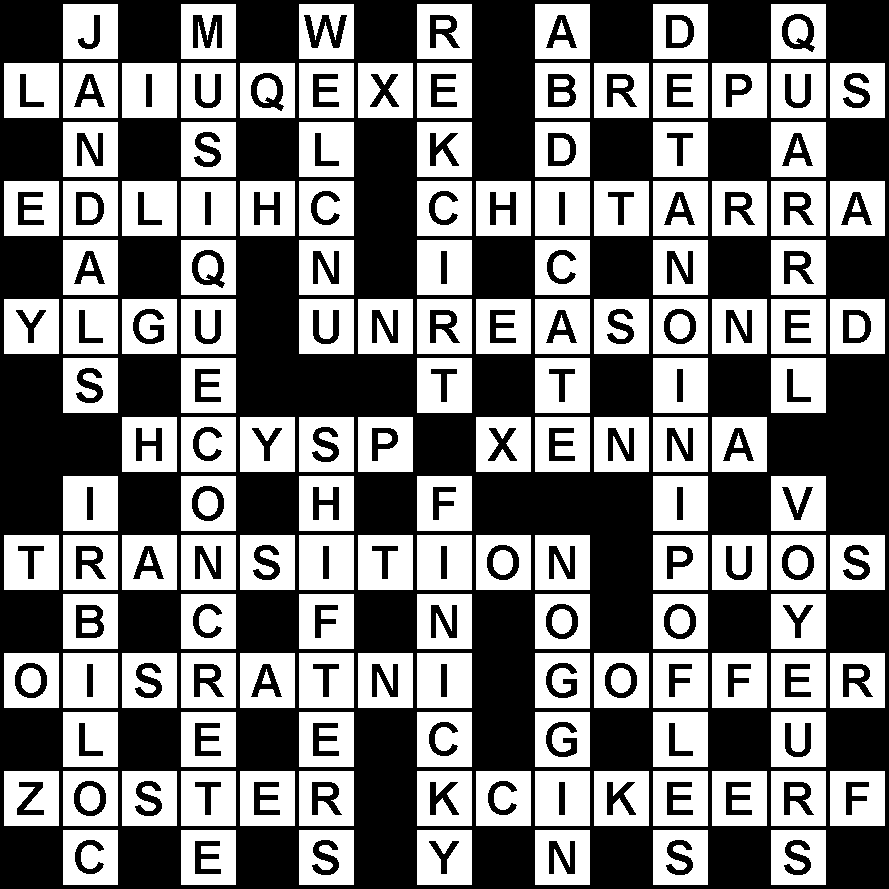
 It seems a natural thing in crossword circles to try and create something different for solvers to tackle, rather than have essentially the same kind of cryptic puzzle every time. Notable variations include the theme crossword (and its many forms), different grid types (as with The Listener), and the Alphabetical Jigsaw (AJ). The AJ traditionally has 26 answers (I have seen variations), each starting with a different letter of the alphabet, and no indication of where the answers should go (hence to “jigsaw” element of the puzzle). John Graham, or Araucaria, is credited with the invention of the AJ which reportedly first appeared in the 1970s. I love AJs as I think they are tests for the setter in construction AND the solver in construction, with advantages on both sides. A setter is obviously restricted in what they can use and the less common starting letters like Q, X, Y, Z and J make clue-writing quite a challenge. A setter, of course, can use more unusual words than they normally would and use a grid construction that wouldn’t be considered OK for everyday cryptics (with lots of missing initials). On the other hand, the solver knows what they are looking for and has the added bonus of a secondary puzzle, a jigsaw, although a number of clues need to be solved before grid filling can start.


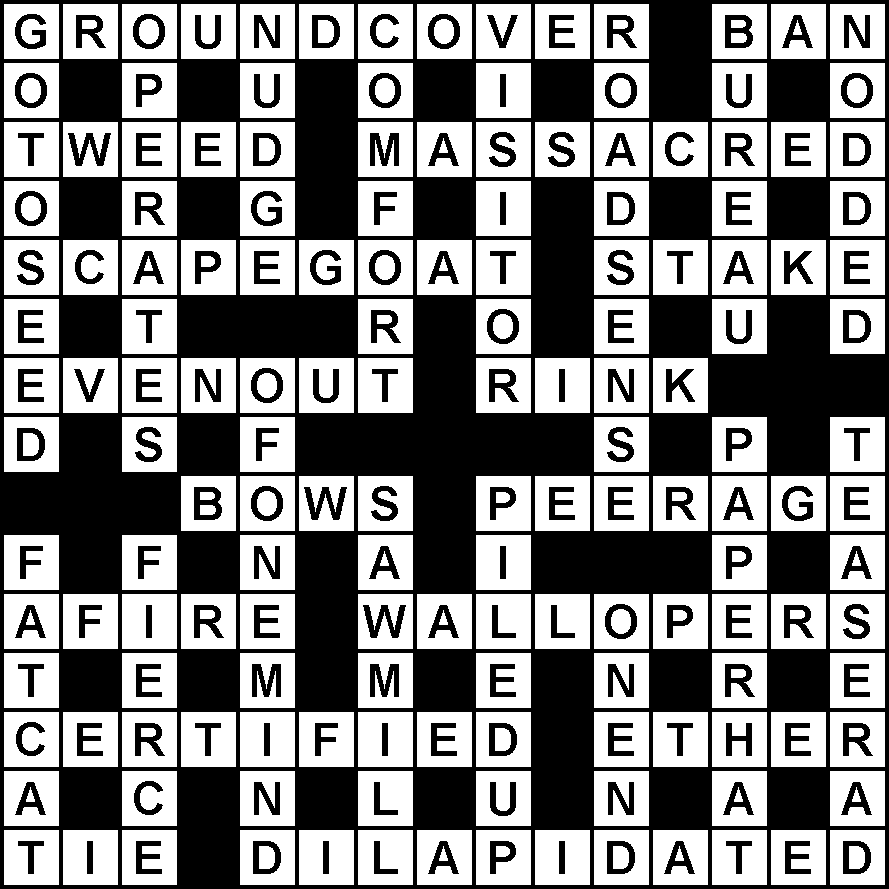 A recent Stickler Weekly brought up an interesting question about a clue that could be considered ambiguous, with two answers valid according to wordplay and crossing letters in the grid. This was the clue in question: Shut down stall (4). The answer given in the solution was FOLD, a double definition, but a number of solvers offered HOLD as a valid answer. My first response was to dismiss the claim as I didn’t think “Shut down” and HOLD were synonymous enough, as to hold might be to shut down temporarily, but note that “temporarily” is a key part of definition and that’s not in the clue. However, it still could fit with some latitude given. The


